The Stopgap's Long Tail: How December's Funding Patch Sets 2027's Starting Line
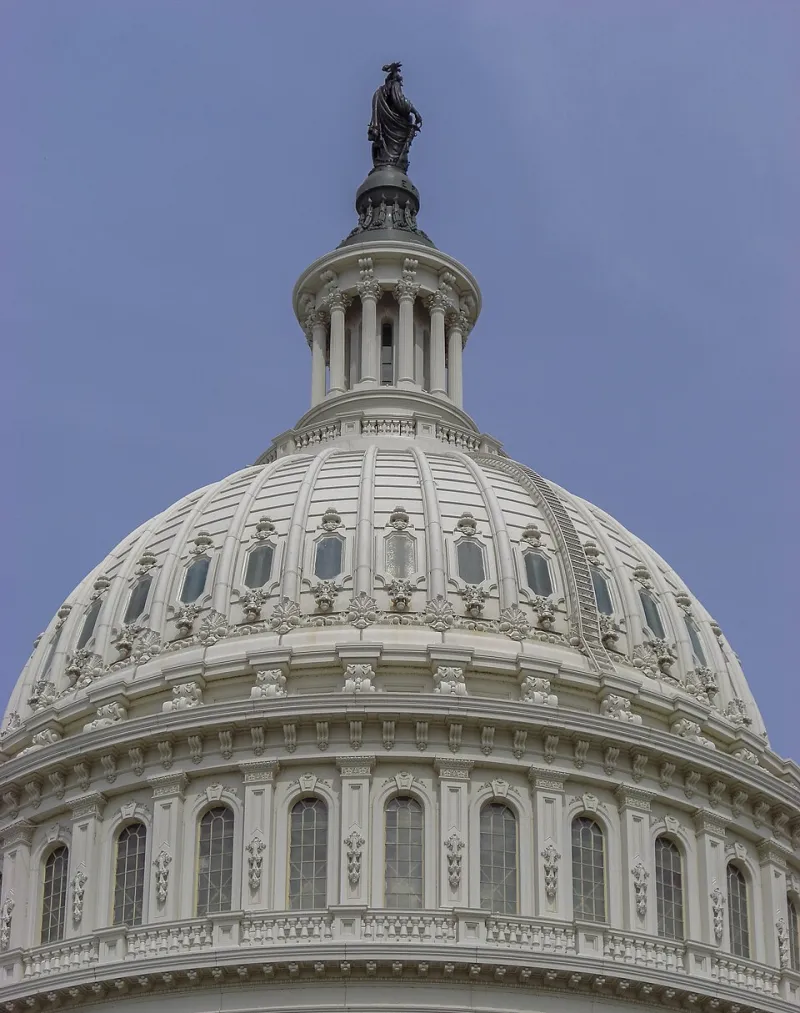
Photo: Diego Delso, CC BY-SA 3.0, via Wikimedia Commons
As of mid-November 2026, Congress is staring at a December funding deadline with the familiar vocabulary of a stopgap: a continuing resolution, a short-term patch, a bridge to next year. The language suggests neutrality, as if the federal government could simply hold its breath until the 120th Congress writes full appropriations bills. The machinery does not work that way. A continuing resolution is a spending decision, and its terms will establish the baseline from which 2027's budget debate begins.
That matters beyond Washington. Stopgap language travels through payroll systems, grant notices, and contract offices. It determines whether an agency can advertise a vacancy, renew a lease, or push a formula grant out the door on schedule. By the time the next Congress convenes, many of those choices will already be embedded in practice.
Prior-Year Rates Are Not a Neutral Default
Most continuing resolutions fund agencies at the prior year's rate, usually with some adjustment for duration and selected exceptions. On paper, that keeps the lights on. In practice, it freezes a set of priorities chosen in an earlier fiscal cycle. Agencies that were slated for increases under the president's budget or under committee drafts will instead operate at the old level. Programs that were expected to shrink may continue at their existing pace.
The effect is especially pronounced for hiring and contracts. An agency operating under a short-term patch often cannot start new programs or issue new awards at a higher level. It may delay hiring because managers cannot assume the money will be there after the patch expires. Contracting officers may extend option years rather than compete a new contract, because a resolution provides less certainty than a full-year appropriation. Those extensions are not merely administrative. They can determine which vendors remain in a market and which local economies retain federal work.
State grants follow a similar path. Formula programs frequently rely on prior-year allocations when a full-year appropriation is missing. A state may receive a notice that its share is based on the previous cycle, not on updated population or need data. Local agencies then build budgets around those figures. When a full-year bill finally arrives, the correction can be slow, and the interim decisions may already have shaped hiring, caseloads, and service schedules.
Anomalies: The Exceptions That Become the Rule
A continuing resolution is rarely a pure extension. It usually carries anomalies, which are specific provisions that allow certain activities to continue differently from the prior-year rate. An anomaly might permit a program to obligate funds at a higher level, extend a particular authority, or keep an activity on a different calendar. Each anomaly is, in effect, a miniature appropriations decision.
The practical question for readers is not whether anomalies exist but what they prioritize. A handful of exceptions can move billions of dollars or preserve a program that would otherwise stall. They can also signal what congressional negotiators expect to do in a full-year bill. Agencies watch those signals closely. A program singled out for an anomaly is more likely to be treated as a going concern in 2027; a program left at the prior-year rate may be quietly deferred.
Riders and the Quiet Bargain
Policy riders are another reason a stopgap is never neutral. Even when negotiators strip controversial provisions from a short-term bill, the bargaining over them sets expectations. Agencies may delay a rule, accelerate a review, or hold back a grant notice because they anticipate what Congress will eventually enact. The absence of a rider is not the absence of influence; it is a temporary settlement that both sides expect to revisit.
For ordinary Americans, the most visible riders are often the least abstract. A provision affecting a health program, an immigration processing authority, or a regional water project can change how quickly a local office responds. The stopgap may last only weeks, but the administrative adjustments it triggers can last far longer.
Apportionment: The Budget After the Budget
Once a continuing resolution becomes law, the Office of Management and Budget apportions funds to agencies. Apportionment is sometimes treated as a technical step, but it is a second layer of budget policy. OMB can distribute funds by quarter, by month, or by activity, and those choices affect how quickly agencies can spend. A cautious apportionment can slow hiring and contract awards even when the underlying appropriation is available.
This is where the stopgap's long tail becomes most concrete. An agency told to operate at a prior-year rate may still have discretion over timing. If OMB apportions conservatively while waiting for a full-year bill, state and local partners may see delays that look like a funding shortage but are actually a cash-management decision. Understanding that distinction matters for anyone tracking federal programs in 2027.
What the December Patch Means for 2027
The 120th Congress will inherit more than a to-do list. It will inherit a set of operating assumptions: which programs are running at last year's levels, which anomalies have created exceptions, which contracts have been extended, and which grant formulas have been applied with old data. The first full-year appropriations bills of 2027 will not start from a blank page. They will start from the stopgap's baseline.
That makes December's negotiations worth watching closely. The headline will be whether Congress avoids a shutdown. The more consequential story will be in the details: the duration of the patch, the anomalies attached to it, the riders left out or left in, and the apportionment guidance that follows. Those details will determine how federal agencies enter the new year, and how quickly the effects reach state capitols, city halls, and household budgets.
A stopgap is not a pause. It is a decision about what government will keep doing, at what level, and on what schedule. In December 2026, that decision will quietly write part of 2027's budget before anyone takes the oath of office.