The Purse and the Pause: How 2026’s Impoundment Dispute Is Testing Article I’s Boundaries
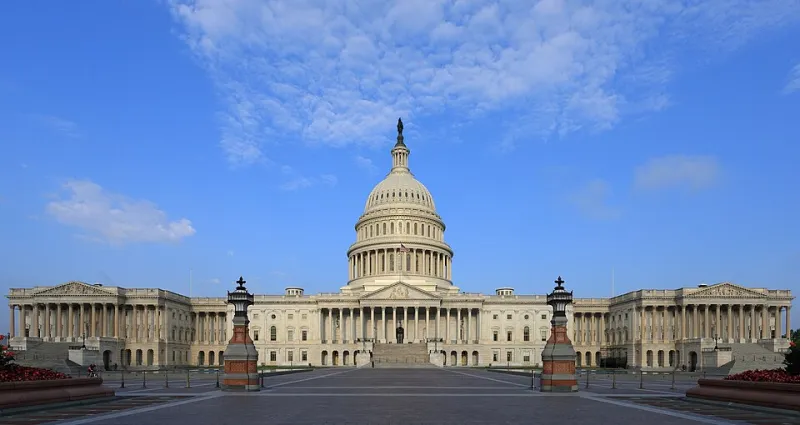
Photo: Martin Falbisoner, CC BY-SA 3.0, via Wikimedia Commons
For most of the federal budget cycle, the debate in Washington is about numbers: how much for this program, how little for that one, which account gets the increase and which gets the cut. But in 2026, the more consequential question has shifted from what Congress appropriates to whether the executive branch will spend it. That distinction — between the power to authorize an outlay and the power to withhold one — is at the center of a widening dispute over the Impoundment Control Act of 1974.
A 1974 Statute With Two Levers
The Impoundment Control Act was Congress’s response to the Nixon administration’s practice of refusing to release funds for programs the president opposed. The law created a structured process for any executive decision to withhold budget authority, and it drew a line between two mechanisms that are often conflated in public debate.
The first is a rescission: a proposal to permanently cancel budget authority. Under the statute, the president may ask Congress to rescind funds, but those funds must be made available for obligation unless Congress approves the cancellation within a specified 45-day period of continuous session. The second is a deferral: a temporary delay in spending. Since amendments enacted in the 1970s, deferrals are permitted only to provide for contingencies or to achieve savings made possible by changes in requirements or operations — not as a backdoor way to advance a policy disagreement with Congress.
The Government Accountability Office plays a watchdog role in this architecture, reviewing executive withholding actions and reporting to Congress when funds are held back without proper authority. The theory is straightforward: the power of the purse belongs to the legislative branch, and the executive’s job is to execute the budget law as written.
The 2026 Test
That theory has been under strain in 2026. Across several agencies, program offices have received directives to pause obligations, slow the processing of grants, or revisit awards that had already been announced. Some of the withholding has been framed as a temporary review; some has been justified by references to programmatic concerns or shifting priorities. Critics on Capitol Hill argue that several of these pauses amount to policy-based impoundments dressed up as management discretion.
The legal question is not new, but the scale and visibility of the 2026 actions are. In the 1970s, the Supreme Court in Train v. City of New York held that the executive could not refuse to allot funds that Congress had directed be spent, even when the president believed the program was inflationary or unwise. The current round of disputes returns to that principle: whether a president may decline to obligate appropriated funds because he disagrees with the program’s purpose, or whether the Impoundment Control Act’s notice-and-approval framework is the only lawful path.
The Court Docket and the Agency Memo
As of November 2026, the dispute has moved along two parallel tracks. In federal district courts, grantees, states, and affected parties have sought injunctions against specific withholding actions, arguing that the pauses violate the 1974 statute and the Appropriations Clause. Some judges have issued temporary relief; others have allowed the reviews to proceed while the parties brief the underlying legal questions. Appellate courts are beginning to weigh in, and the possibility of a broader ruling on the scope of executive impoundment authority is now a live prospect.
On the administrative track, agencies have issued internal guidance describing how program offices should handle the pauses, what documentation is required, and how to respond to congressional inquiries. The GAO has been asked to review several of the withholding actions, and its findings — whether a particular pause qualifies as a permissible deferral or an unauthorized rescission — could shape both the litigation and the oversight hearings that have followed.
Beyond the Dollars
The outcome matters well beyond the immediate budget totals. Federal grants flow to state agencies, local governments, universities, and nonprofit service providers, many of which plan their own budgets on the assumption that appropriated funds will be available on schedule. A prolonged pause can force layoffs, delay construction, or interrupt services that constituents experience directly. For members of Congress, the dispute is also a test of institutional leverage: if the executive can withhold funds without consequence, the appropriations process becomes less a tool of legislative direction and more a suggestion.
Congress has several potential responses. It can use its oversight authority to demand documents and testimony. It can attach conditions or reporting requirements to future appropriations. It can pursue expedited rescission procedures or rely on the courts to enforce the 1974 framework. What it cannot easily do is legislate away the underlying constitutional tension between Article I’s spending power and the executive’s responsibility to manage the programs Congress funds.
What to Watch
The next phase will turn on three questions. First, how appellate courts define the boundary between a permissible temporary deferral and an impermissible policy-based refusal to spend. Second, whether Congress uses the 45-day rescission window to force a recorded vote on the withheld funds. Third, whether agencies comply promptly with court orders and GAO findings, or whether the dispute becomes a longer standoff over the reach of executive discretion.
For now, the impoundment debate is often described as a fight about dollars. It is better understood as a fight about institutional authority — one that will shape how federal programs are delivered, how states and localities plan their budgets, and how faithfully the appropriations process translates legislative choices into government action.