The Lookback Ledger: Why Late-2026 Rules Are Being Drafted for a January Eraser
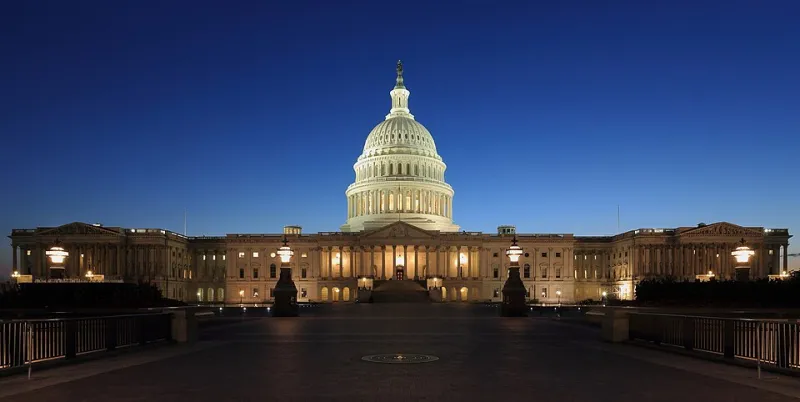
Photo: Martin Falbisoner, CC BY-SA 3.0, via Wikimedia Commons
As federal agencies rush to finish rules before the year ends, a quieter count is running alongside the Federal Register's publication schedule. It is the Congressional Review Act's lookback window, measured in legislative days rather than calendar days. That window is why a rule signed in late 2026 can still be exposed to a disapproval resolution after the 120th Congress is sworn in. It is also why agency lawyers, congressional staff, and regulated industries are already treating December 2026 as a drafting constraint for 2027.
The clock is legislative, not calendar
The Congressional Review Act, enacted in 1996, requires agencies to submit each final rule to both chambers of Congress and to the Government Accountability Office before it can take effect. Congress then has 60 legislative days to pass a joint resolution of disapproval. If the rule is submitted near the end of a session, the clock can carry into the next session. That carryover is the provision that turns a late-year rule into a January target.
The distinction between calendar days and legislative days is not academic. Congress adjourns, takes recesses, and schedules pro forma sessions. A rule submitted in the fall may still have days left on its lookback clock when the new Congress convenes. The practical result is that the eraser window can reach backward further than a simple 60-day calendar calculation would suggest.
Which rules sit closest to the eraser
The rules most exposed are not necessarily the most controversial ones. They are the ones that land inside the lookback window with the thinnest political and legal cushion. Four categories stand out.
First, major rules finalized late in the session. Rules designated as significant or economically significant draw more attention, more comment, and more congressional interest. When they are submitted late, they also draw the lookback clock into a new Congress.
Second, rules with contested statutory authority. A disapproval resolution is easier to defend politically when members can argue that an agency exceeded its statute. Agencies know this, and some are already drafting explanations of authority with an eye toward a potential floor debate.
Third, rules that split the regulated community. A rule that pleases one industry segment and harms another generates the kind of organized lobbying that can sustain a disapproval resolution. That is true even when the rule is not a major rule.
Fourth, rules finalized after the informal point when congressional leaders begin assembling the year-end calendar. Once leadership starts counting days for adjournment, every subsequent submission is evaluated against the carryover risk. Agencies that want a rule to survive often try to submit earlier; agencies that want to lock in a policy may accept the risk.
How agencies draft around the possibility
Agencies cannot ignore the CRA, and they do not. In practice, the lookback window shapes drafting in several ways.
Some agencies delay effective dates to reduce the chance that a rule takes effect and then is erased. Others write shorter rules with clearer statutory hooks, hoping to make a disapproval resolution harder to justify. Some split a large rule into separate submissions so that a disapproval resolution does not take down the entire package. Still others rely on guidance documents or subregulatory memoranda, though those tools carry their own legal and political risks.
The most important constraint is the CRA's prohibition on reissuing a disapproved rule in substantially the same form without new statutory authorization. That provision is why a disapproval resolution is more than a symbolic vote. It can remove an issue from an agency's 2027 agenda entirely, or force the agency to seek a new statute before trying again.
A December procedural vote is a January calendar decision
In the Senate, a joint resolution of disapproval is privileged. That means it can be brought to the floor without the usual cloture process, and it is not subject to a 60-vote threshold. Debate is limited, and a simple majority can pass it. In the House, the majority party controls the floor, but the resolution still has to move through committee and the Rules Committee.
A procedural vote in December, such as a motion to proceed, can therefore do more than signal intent. It can position a resolution for quick action in January, force agencies to reconsider implementation plans, and give lobbyists a clear date to work toward. A December vote can also fail, and a failed procedural vote is itself a signal that the rule may survive.
A practical checklist for tracking CRA resolutions
Readers who want to follow the lookback window can use public sources without guessing.
- Check the Federal Register for each rule's submission notice, which identifies the date the rule was submitted to Congress and GAO.
- Track the GAO's CRA database, which lists rules submitted and the relevant dates.
- Follow joint resolutions of disapproval by number and sponsor in both chambers. The numbering restarts each Congress, so pay attention to the Congress number.
- Watch committee referrals. In the Senate, the Homeland Security and Governmental Affairs Committee is the usual referral point; in the House, the Oversight and Accountability Committee.
- Count legislative days using the chambers' adjournment resolutions, not the calendar.
- Note whether a rule is designated as a major rule, since that affects the lookback and the political attention it receives.
- Watch for presidential veto signals and for agency statements about implementation if a resolution advances.
What to watch before the December recess
The most useful indicator is not a single rule but the pattern of submissions. If agencies are holding rules back or accelerating them, that is a sign they are pricing the lookback risk. If congressional committees are scheduling markups of disapproval resolutions, that is a sign the eraser window is being operationalized.
For 2027, the consequence is straightforward. A rule that survives the lookback window can proceed on its own timetable. A rule that does not survive can vanish before it ever takes effect, and the agency that wrote it will have to decide whether to seek a new statute, write a narrower rule, or abandon the policy. The count to 60 is already running.