The January Reveal: Tracing the Year-End Lobbying Push Washington Won’t See Until 2027
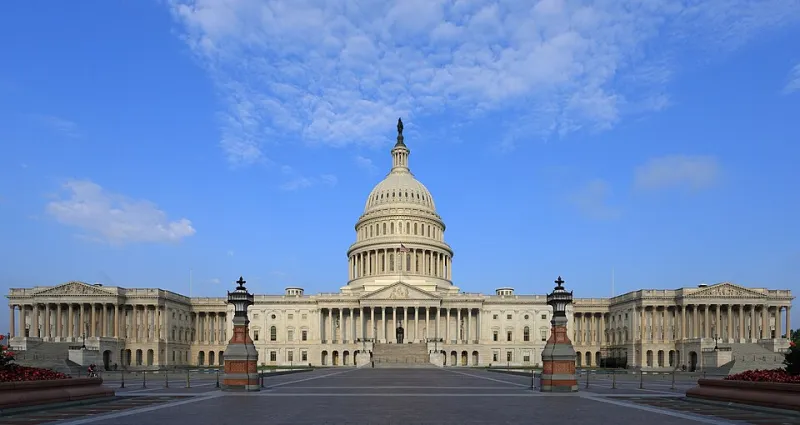
Photo: Martin Falbisoner, CC BY-SA 3.0, via Wikimedia Commons
As of Nov. 17, 2026, Washington is in the strange interval between an election and a new Congress. Lawmakers are finishing a post-election session. Appropriators are negotiating the contours of a funding package. Tax writers are weighing extenders. Agencies are moving rules that will take effect well into 2027. And lobbying shops are doing what they do in every lame-duck stretch: pressing arguments, arranging meetings, and filing comments while the calendar still allows.
Much of that work will remain out of public view until January. That is not because of a secret channel or a broken system. It is because the Lobbying Disclosure Act runs on a quarterly clock, and the fourth quarter of 2026 does not close until Dec. 31. The reports covering October through December are generally due by Jan. 20, 2027. Until then, the public sees the third-quarter snapshot and whatever voluntary disclosures registrants choose to make.
The Calendar Behind the Curtain
The Lobbying Disclosure Act requires registered lobbyists and lobbying firms to file quarterly activity reports, often called LD-2 filings. Those reports identify the client, the issues lobbied, the agencies and congressional chambers contacted, and the amount spent or income received. They also list the lobbyists who worked on the account. The forms are public, but they are retrospective. They describe a quarter after it ends.
That structure creates a predictable year-end blind spot. A trade association that meets with Senate aides in late November about a spending provision will not appear in the database until January. A coalition that urges an agency to finalize a rule before the new year may be visible through its public comments, but its paid lobbying contacts will surface later. A company that retains a new firm in December to work on a tax extenders package can wait until the first monthly or quarterly filing window to disclose the arrangement, depending on its filing schedule.
The result is not an absence of information. It is a delay in the information that matters most for tracing who tried to shape the final decisions of the 2026 session.
Where the Year-End Pressure Is Concentrated
Several issue areas are especially likely to generate late-filed activity. Appropriations is the most obvious. Whenever Congress relies on a stopgap or negotiates an end-of-year package, lobbyists for states, localities, universities, hospitals, and contractors press for specific provisions, report language, or funding levels. Those contacts are often concentrated in the weeks before a deadline.
Tax extenders are another candidate. Businesses and trade groups routinely seek certainty on expired or expiring provisions, and the end of a Congress is a natural time for last-minute advocacy. Health care, defense procurement, energy permitting, financial services regulation, and technology policy are also likely to appear in January filings. So are agency-focused campaigns: lobbyists may press the White House Office of Management and Budget, the Department of Health and Human Services, the Environmental Protection Agency, or the Department of Labor on rules that are scheduled to move before the next administration’s appointees settle in.
The common thread is timing. These are not necessarily the largest lobbying campaigns of 2026. They are the campaigns most likely to cluster in the fourth quarter, when legislative text and regulatory calendars are still in motion.
Why the Lag Is Structural, Not Scandalous
The quarterly calendar is a design choice, not a loophole. The Lobbying Disclosure Act was written to require periodic reporting without imposing a daily filing burden on registrants. The House Clerk and the Senate Office of Public Records maintain the filings, and the data is used by journalists, academics, and advocacy groups. The system depends on registrants’ good-faith compliance, and late or amended filings are not uncommon.
That makes the year-end gap easy to misread. A January filing that shows a flurry of contacts does not prove that influence was improper. It proves that the lobbying happened in the fourth quarter. The more useful question is whether the disclosed contacts match the public record: Did a company that urged a specific appropriations provision also file a comment on the related rule? Did a trade group’s stated issue code align with the committee that actually wrote the language? Did a newly registered lobbyist previously work for the agency now deciding the matter?
Those are the questions that turn a late filing into a usable accountability tool.
How to Read the January Filings
When the fourth-quarter reports land in January 2027, readers should start with the Senate’s Lobbying Disclosure Act database and the House Clerk’s lobbying disclosure site. Both allow searches by registrant, client, and issue area. The filings will show reported income and expenses, but those figures are often rounded and should be treated as directional rather than exact.
A second step is to compare the new filings with the third-quarter reports. New clients, new lobbyists, and newly listed issue areas are the clearest signals of a shifted strategy. A third step is to match the disclosed agencies and chambers against the public calendar. If a filing says a client lobbied the Senate Appropriations Committee on defense health research in November, the relevant question is whether that issue appeared in the final bill or report language.
Finally, readers should watch for amendments. Registrants sometimes correct or expand earlier filings, and those amendments can reveal activity that was initially underdescribed. The January tranche is not a final verdict on 2026 lobbying. It is the first complete public accounting of the quarter when many of the year’s final decisions were made.
What the Map Will Show
The year-end lobbying push is already underway. The paperwork simply has not caught up. That gap is a feature of the disclosure calendar, and it puts a premium on patience and follow-through. The January filings will not capture every conversation, and they will not settle every question about why a provision survived or a rule moved. But they will provide the clearest available trail through the last three months of 2026—a trail that is currently invisible to anyone relying only on the public database.
For voters, reporters, and oversight staff, the lesson is straightforward: do not treat the absence of fourth-quarter filings as the absence of lobbying. Treat it as a scheduled delay, and prepare to read the January record against the decisions it was meant to influence.